

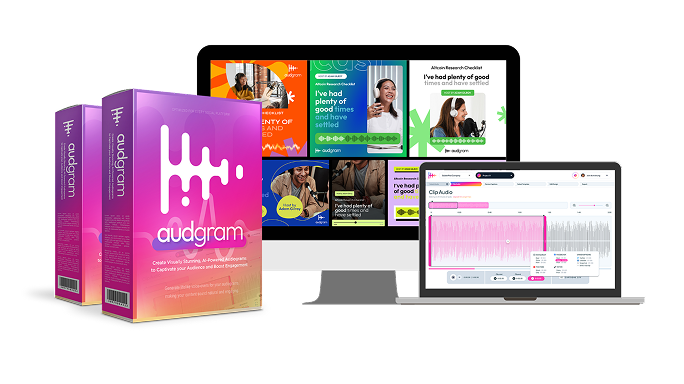
 Commission disclosure: This article includes a promotional link to AudGram. It is an educational guide about choosing stronger podcast excerpts for audiograms, not a test or endorsement of the product.
If you already have a good episode, interview, lesson, or coaching session, the hardest part of making an audiogram is often not the visuals. It is choosing a clip that still makes sense when it is separated from the full conversation. A strong excerpt protects meaning, supports caption review, and gives your design choices a clear target.
For the review and offer details that frame the entry plan, see the AudGram review page. This guide stays focused on excerpt selection so podcasters, educators, and small marketing teams can make better clip decisions before moving to captions, design, or export.
Why excerpt choice matters for audiograms
An audiogram is short by design. That means the clip has to work fast, even for someone who never hears the full source audio. When the excerpt is self-contained, viewers can understand the topic quickly and decide whether to keep watching or listening. When it is not, the result can feel abrupt, misleading, or simply incomplete.

Choosing the excerpt first also improves the rest of the workflow. You can check captions against one specific moment, build the visual emphasis around one idea, and keep teammates aligned on what the final audiogram is trying to say. That is especially useful if you are preparing multiple promotional posts from the same recording.
Signals of a self-contained clip
A practical way to judge a potential excerpt is to look for three things: setup, payoff, and clarity. If all three are present, the clip is more likely to stand alone without extra explanation.
1) Setup
The opening should orient the listener quickly. It does not need a long introduction, but it should not depend on several earlier exchanges to make sense. If the first line is full of “exactly,” “that’s what I mean,” or similar references to missing dialogue, the segment may need a different starting point.
2) Payoff
The excerpt should arrive at a complete thought. That might be a useful tip, a sharp observation, a memorable answer, or a concise summary. The key is that the moment should feel finished on its own rather than like a teaser that only works if the audience already knows the surrounding discussion.
3) Clarity
Clarity matters because captions, visual pacing, and platform viewing habits all reward quick comprehension. If the clip depends on overlapping speech, niche shorthand, or a lot of back-and-forth, it may work better as a full episode moment than as a standalone promotional excerpt.
A fictional gardening interview example
Imagine a gardening podcast where the host asks how a beginner should start with only a balcony and a few containers. One possible excerpt includes several lines of setup about weather, soil, and pot size before landing on a useful answer. Another begins at the sentence: “If you only have room for three pots, start with herbs, one leafy green, and one flower for pollinators.”
The second option is easier to use because it is already complete in thought. The listener immediately understands the subject, the advice is specific, and the wording is short enough to pair well with captions. You may still trim a second or two for flow, but the idea does not depend on hidden dialogue.
That is the real test for excerpt selection: not whether the line sounds dramatic in isolation, but whether it preserves meaning after the rest of the conversation is removed.
Permission, attribution, and context checks
Before uploading any clip, confirm that you are allowed to use the audio, voices, and supporting assets in promotional form. For your own recordings, that may mean checking internal approvals or release terms. For guest interviews, co-hosted shows, or educational recordings with contributors, verify that your planned reuse is covered.
Then check whether the clip changes meaning when the surrounding sentences disappear. Does it remove a qualifier, correction, or joke that matters? Could it make a speaker sound more certain, more negative, or more complete than intended? If so, either choose a different segment or include enough surrounding material to keep the original point intact.
Attribution also matters. Keep names, institutions, and sources accurate. Avoid clipping a statement in a way that implies endorsement, diagnosis, or agreement that was not actually present in the source conversation.
A simple clip-selection checklist
Use this checklist before sending audio into the rest of the workflow:
- Does the excerpt begin with enough context to be understood alone?
- Is the central idea clear within the first few seconds?
- Does the clip end after the point is made, not in the middle of a new idea?
- Are names, terms, and numbers easy to hear and caption accurately?
- Do you have permission to reuse the audio in this format?
- Will the excerpt still make sense if someone hears it without the full episode?
- Does the tone fit the audience you want to reach on social channels?
If you answer “no” to more than one of those questions, keep looking. In many cases, a slightly later or slightly shorter segment works better than the first impressive-sounding line you find.
Practical choices for different teams
Podcasters: Choose a moment that teases the episode without needing a long explanation. A complete answer often works better than a dramatic fragment because it leaves less room for confusion.
Educators: Favor segments that state one principle, example, or definition clearly. If the audience may not know the topic already, the excerpt should still be understandable without the surrounding lesson.
Small marketing teams: Look for a line that supports one message or one audience problem. The goal is not to explain everything at once. The goal is to make one idea easy to remember and easy to review.
What to avoid when choosing a clip
Do not choose a segment just because it sounds dramatic. A clip that depends on earlier context can create confusion when shared alone. Also avoid excerpts that lean on visual information from the original recording unless that visual meaning is restored in the final asset.
Longer is not automatically better. Shorter excerpts often hold attention more cleanly when the thought is complete. The best length is the one that preserves meaning without padding the moment with filler.
Once the excerpt is stable, later steps become easier. Caption review, visual design, and export planning all work better when everyone is reacting to the same clear segment. For those next steps, see the supporting guides on caption review and branded audiogram design.
Reader takeaway
The best podcast excerpt is usually the one that can survive outside the episode. It has enough setup, a clear payoff, and the permissions and context needed to share it responsibly. When you choose that segment first, the rest of the audiogram workflow becomes simpler and easier to review.
Reader questions
How long should a podcast excerpt be for an audiogram?
There is no universal length. A useful excerpt is usually as short as it can be while still preserving the setup and the payoff. If a shorter version leaves out the point or makes the clip harder to understand, keep a little more context. If the idea is already complete, trimming the clip can make it easier to caption and easier to follow.
What makes a clip feel self-contained?
A self-contained clip gives the listener enough context to understand what is being discussed, reaches a clear idea or answer, and ends after that idea is complete. If the excerpt depends on an earlier joke, a missing question, or a reference only the full audience would recognize, it is probably not self-contained yet.
Can I reuse a guest interview clip without extra permission?
Not automatically. Check the permissions, release terms, or internal approvals that apply to the recording and to promotional reuse. If other speakers, institutions, or sensitive statements are included, verify that the form you plan to publish is covered before uploading it.
How do I know if an excerpt changes the meaning of the original conversation?
Read the chosen lines in context and ask what disappears when the surrounding sentences are removed. If a qualifier, correction, or follow-up is cut away, the excerpt may sound more certain or more negative than the speaker intended. In that case, choose a different section or keep enough surrounding audio to preserve the meaning.
What is the best way to choose an excerpt for a team campaign?
Start with one audience goal and one message. Then look for a moment in the source audio that supports that goal without needing extra explanation. A shared checklist helps the team judge whether the excerpt is understandable, accurate, and appropriate before anyone moves on to captions or design.
