

 Affiliate disclosure: This review includes a commission link. If you buy through it, ProdifyDigital may earn a commission at no extra cost to you.
If you want to build faceless affiliate review content without filming yourself, hiring a video team, or stitching together several tools, the real question is simple: does SuperAffiliatesAI Premium reduce enough friction to be worth considering? Based on the official sales page checked on 2026-09-25, the front-end offer is positioned as an AI-assisted workflow for finding products, creating review-style content, and publishing it across video platforms. That can be useful for solo affiliates who want to move faster. It is not a shortcut around niche judgment, compliance, or the consistency needed to earn traction.
My read is that SuperAffiliatesAI Premium is most relevant for beginners and intermediate creators who already understand that software can speed up execution but cannot choose the right offer for them. If your biggest problem is production friction, the tool may help. If your biggest problem is strategy, product fit, or audience trust, it will not solve that on its own. This is a practical automation tool for faceless review channels, not a business in a box.
Direct Answer & Introduction
Is it worth it?
For the right buyer, yes. The front-end version appears worth evaluating if your goal is to create faceless affiliate review content without appearing on camera or assembling a separate stack for scripting, editing, and publishing. The appeal is speed and simplification. If you want to publish review assets more efficiently, that matters.

For the wrong buyer, no. If you expect software to eliminate strategy, guarantee sales, or solve traffic by itself, you are likely to be disappointed. Affiliate review channels still depend on product choice, search intent, trust signals, and consistency. A tool can compress the workflow; it cannot replace judgment.
What problem does it solve?
The core problem is workload. Faceless review channels require product research, script writing, formatting for video platforms, and repeat publishing. The official sales page says the software is designed to automate those stages with AI-generated product analysis, two-voice review scripts, scroll-capture style video creation, thumbnail variants, and publishing workflows. That is a coherent value proposition for people stuck at the “too much manual work” stage.
What outcome should a reader expect?
A realistic outcome is faster content production and a clearer workflow. A less realistic expectation is automatic income with no learning curve. The tool may help you produce more review assets, but whether those assets attract clicks and conversions still depends on niche demand, offer quality, and how well your content answers buyer questions.
Fundamentals
What a faceless affiliate review channel is
A faceless affiliate review channel is a content channel that reviews products without the creator appearing on camera. The creator usually relies on voiceover, screen capture, text overlays, stock visuals, or AI-generated presentation elements. The goal is to reach viewers who are already looking for product information and then send them to an affiliate offer.
That model is attractive because it lowers the personal exposure barrier, but it does not lower the need for credibility. In fact, faceless formats often need even clearer structure because the viewer cannot rely on facial presence or live demonstration to build trust.
What the front-end offer appears to include
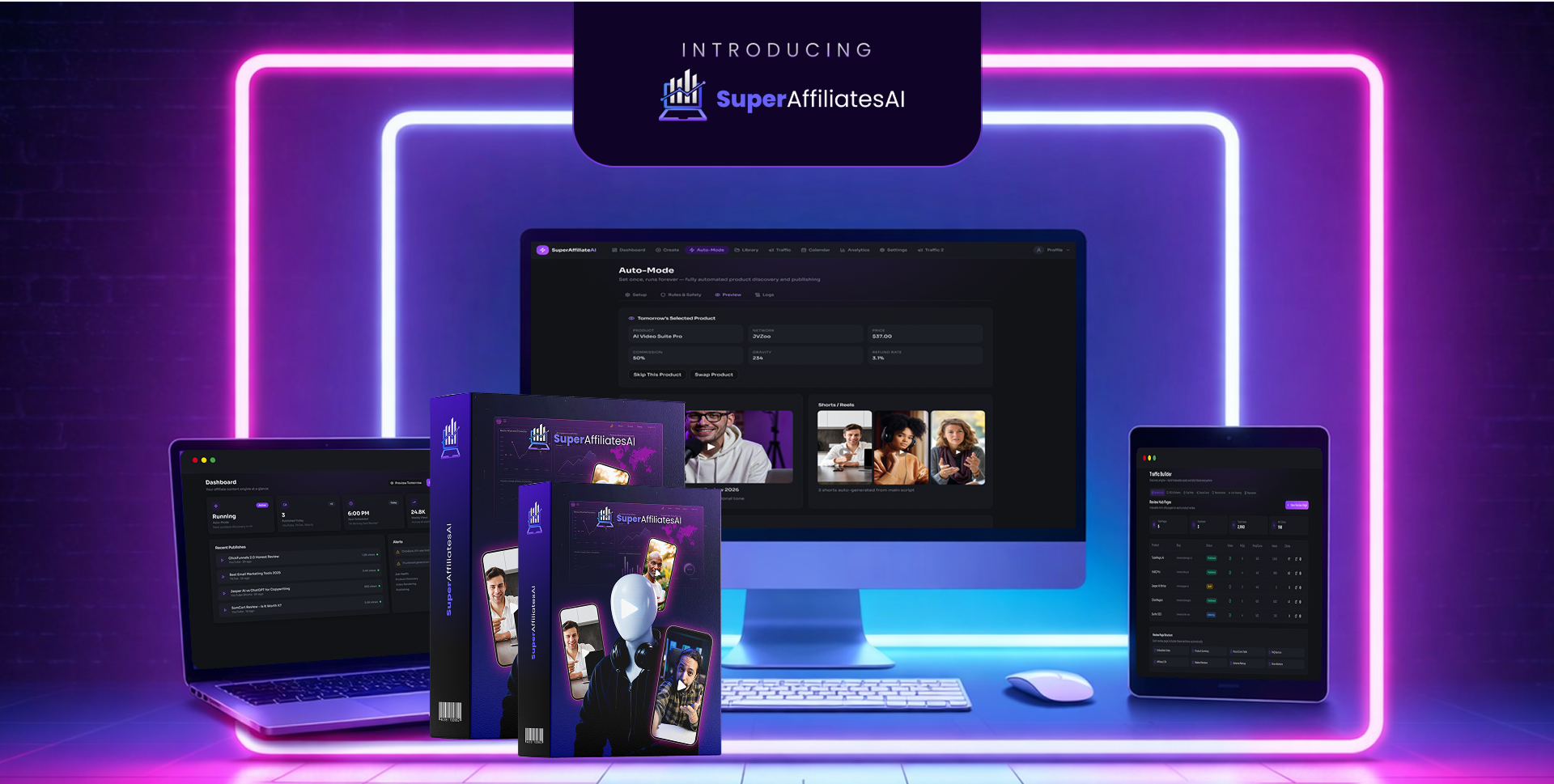
From the official sales page, the front-end/lite offer appears to bundle a workflow that covers product discovery, review creation, formatting, and publishing. The page describes product intelligence profiles, two-voice scripts, thumbnail generation, platform-specific versions, and auto-publishing or scheduled posting. The practical takeaway is that the base purchase is meant to be the core engine, not just a single-purpose editor.
Important distinction: the sales page also mentions possible upgrades and connected services in broad terms. Those should be treated separately from the base purchase. A front-end offer may be enough for some buyers, while others may need optional add-ons, account access, or platform eligibility that changes the real total cost. Do not assume every feature, publishing route, or usage level belongs in the base price.
What to check before buying
Three questions matter most. First, does the tool reduce the repetitive work you actually dislike? Second, does it support the platforms and workflow you intend to use? Third, can you still maintain authenticity and compliance when a tool generates content quickly?
If the answer to those questions is yes, the offer may be a sensible fit. If not, a simpler stack or a manual workflow may be better value.
Main Process / Strategies
How the workflow is intended to work
The official sales page describes four broad stages: find a product, create review content, publish it, and automate repeated posting. In practice, that means the software is trying to compress the most time-consuming parts of a review channel into one interface. That is useful because many creators do not fail at ideas; they fail at output consistency.
Here is the practical logic. Product discovery is the first gate: if the offer is weak, even a polished video will struggle. Script creation is the second gate: if the review sounds like pure promotion, viewers may bounce. Publishing is the third gate: if you cannot post consistently in the format each platform expects, you lose momentum. A tool that addresses all three can be useful, but only when you provide the right inputs.
Example: one review turned into multiple assets
Example: You choose a product in a crowded software niche. The tool assembles a profile that highlights what the product claims to do, who it is for, and possible drawbacks. You then use that profile to build a review outline that includes a clear problem statement, a brief explanation of the product, a balanced pros-and-cons section, and a closing recommendation. After that, you adapt the video into a short-form version and a long-form version for separate platforms.
That workflow is valuable because it turns one product decision into multiple content assets. The real win is not “AI made a video.” The real win is “one research pass produced several publishable assets faster than manual production would have.”
How to judge whether the tool is doing enough work
A useful buying method is to compare your current manual process against the platform’s promised shortcuts. Ask yourself what you currently spend time on:
- finding products to review
- writing scripts
- making thumbnails
- reformatting for different platforms
- posting and scheduling
If the software removes only one of those tasks, it may be a convenience tool. If it meaningfully reduces most of them, it becomes a workflow tool. That distinction matters because convenience is easier to replace than system-level automation.
Where the offer may be strongest
The strongest use case is likely a solo affiliate who wants to publish more consistently without camera work or a production team. The front-end offer also makes more sense for people who are comfortable testing and refining content over time. In other words, the tool may be a good fit for execution speed, not for instant mastery.
The biggest practical benefit is probably consistency. If the software helps you avoid blank-page friction, it may help you keep publishing long enough to learn what topics, review angles, and formats resonate.
Where the offer may be overkill
If you already have a streamlined research and editing system, or if you only want to publish a few hand-crafted reviews each month, the automation may be more than you need. In that case, a lighter setup could cost less and give you more control. Likewise, if you want deep product testing or expert demonstrations, a faceless automation tool may be the wrong format entirely.
FAQs, Mistakes & Expert Insights
Common mistakes buyers make
The first mistake is confusing automation with strategy. A tool can help you publish faster, but it cannot tell you whether the niche has buyer intent, whether the product is credible, or whether your angle is too generic. The second mistake is assuming one content format fits every platform equally well. Long-form review videos, Shorts, Reels, and TikTok clips often need different pacing and different hooks.
The third mistake is ignoring total cost. The base offer may be one purchase, but connected services, platform account requirements, or optional upgrades can change the economics. Anyone comparing value should separate the base software from anything extra that supports voice, publishing, or scale.
The fourth mistake is overusing AI language patterns. If every review sounds the same, viewers may tune out. A faceless channel still needs clear objections, specific details, and a natural tone. The tool may generate structure, but you still need editorial judgment.
Nuanced insight: speed is not the same as trust
The sales page emphasizes product analysis and two-voice style reviews, which suggests the tool is trying to improve trust as well as speed. That matters. In affiliate content, viewers usually respond better when a review seems to weigh pros and cons instead of selling at full volume. But trust is ultimately created by the usefulness of the review, not by the presence of a generated dialogue format alone.
Example: A short review that only repeats benefits may produce clicks in the short term but weaken audience confidence. A review that names who the product is for, who should skip it, and what to verify before buying is usually more credible. That is the kind of content a buyer should aim to create with any AI tool.
Nuanced insight: platform support is only part of the job
Even if a tool can format content for multiple platforms, each platform still has different discovery habits. Search-driven viewers want specific terms like “review,” “scam or legit,” or “worth it.” Feed-driven viewers need a sharper hook and quicker pacing. So multi-platform publishing is helpful, but it does not remove the need to tailor content to the platform.
Five reader questions
1. Is SuperAffiliatesAI Premium good for beginners?
It may be useful for beginners who want a guided workflow and do not want to handle separate tools for scripting, editing, and publishing. That said, beginners still need basic affiliate judgment, because the software cannot choose the right niche or guarantee that a review will convert.
2. Does it replace a video editor?
It may replace some editing and formatting tasks, especially if the promised automation works as described. However, if you need precise creative control or custom production polish, you may still prefer a dedicated editor for some jobs.
3. Is the front-end offer enough on its own?
For some buyers, yes. If your main need is a single system to simplify faceless review creation, the base offer may be enough to start. If you need advanced scaling, additional publishing capacity, or specific external services, compare the base version with any optional upgrades separately.
4. What is the biggest risk in buying it?
The biggest risk is expecting software to fix weak product selection or thin content. A fast workflow can still produce low-performing videos if the offer is poor or the review lacks credibility.
5. Who should probably skip it?
People who want full manual control, people who plan to publish only occasionally, and people who need deeply customized video production may be better off with a simpler or more specialized setup.
Is SuperAffiliatesAI Premium good for beginners?
It may be useful for beginners who want a guided workflow and do not want to handle separate tools for scripting, editing, and publishing. That said, beginners still need basic affiliate judgment, because the software cannot choose the right niche or guarantee that a review will convert.
Does it replace a video editor?
It may replace some editing and formatting tasks, especially if the promised automation works as described. However, if you need precise creative control or custom production polish, you may still prefer a dedicated editor for some jobs.
Is the front-end offer enough on its own?
For some buyers, yes. If your main need is a single system to simplify faceless review creation, the base offer may be enough to start. If you need advanced scaling, additional publishing capacity, or specific external services, compare the base version with any optional upgrades separately.
What is the biggest risk in buying it?
The biggest risk is expecting software to fix weak product selection or thin content. A fast workflow can still produce low-performing videos if the offer is poor or the review lacks credibility.
Who should probably skip it?
People who want full manual control, people who plan to publish only occasionally, and people who need deeply customized video production may be better off with a simpler or more specialized setup.
Summary & Next Steps
Bottom-line decision
SuperAffiliatesAI Premium looks like a sensible buy only if your main pain point is content-production speed for faceless affiliate reviews. It seems to offer a unified workflow that could save time and reduce tool sprawl. It is less compelling if you want a teaching-first product, highly custom creative control, or a guarantee of results.
The clearest way to think about it is this: it may be a practical automation layer for people already committed to the faceless review model. It is not a substitute for niche research, offer quality, or audience trust. If you understand that tradeoff, the offer is easier to judge fairly.
What to compare before checkout
Before buying, compare the front-end offer against your current stack. Ask whether it reduces enough repetitive work to justify switching. Check whether any upgrades or connected services are necessary for the workflow you want. And make sure your publishing plan aligns with the platforms and content formats you actually intend to use.
For readers who want to understand the broader model first, the most helpful next steps are to review how faceless affiliate channels work, how to judge an AI review tool before purchase, and how to structure review content so it feels credible rather than generic. Those guides sit naturally alongside this review and help you make a more informed choice. If you already know the model and just want a faster execution system, then the product page is the next place to evaluate the fit.
SuperAffiliatesAI Premium can be a smart shortcut for the right kind of affiliate creator. For everyone else, the safer choice is to step back, compare the workflow honestly, and decide whether automation is solving the problem you actually have.
Related reading: How Faceless Affiliate Review Channels Work, How to Judge an AI Review Content Tool Before You Buy, Affiliate Review Content That Converts, Common Mistakes in Affiliate Review Channels, A Simple Affiliate Review Channel Launch Plan for the First 30 Days

[…] you want a broader commercial comparison, see the product review pillar. For the workflow side of review channels, the supporting guides on faceless channel basics, […]
[…] For commercial investigation, read SuperAffiliatesAI Premium Review: Is It Worth It for Faceless Affiliate Review Channels?. […]