

 Commission disclosure: If you buy through the link in this review, ProdifyDigital may earn a commission at no extra cost to you.
If you are trying to decide whether SerpSling AI Lite is worth buying, the honest answer is that it may be useful for people who want a guided starting point for AI search optimization, but it is not a shortcut that removes the need for judgment, editing, or site-level cleanup. That matters because AI search visibility is still a moving target, and a front-end tool only helps if it fits your workflow and the work you still need to do.
This review is for site owners, freelancers, and small agencies who want to know whether the lite offer gives them a practical entry point or just another dashboard to manage. The main outcome you should expect from reading this is a clearer sense of fit: whether the product could save time, help organize tasks, or support a service workflow without promising outcomes it cannot control.
Direct Answer & Introduction
What SerpSling AI Lite appears designed to do
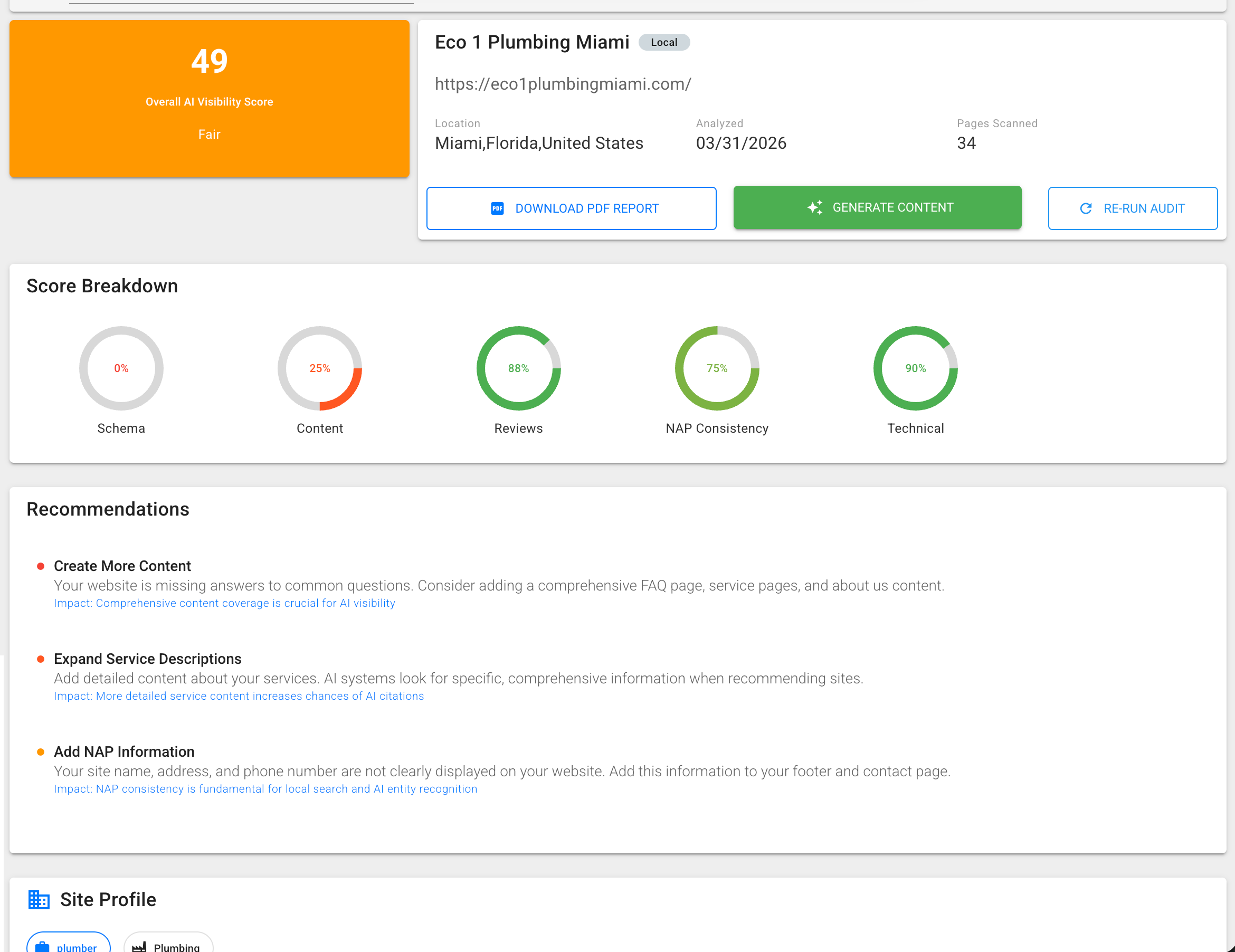
Based on the official launch page checked on 2026-09-26, SerpSling AI Lite is positioned as a front-end offer for AI search optimization. The vendor presents it around auditing, optimizing, and deploying AI-ready content and structured data so sites may be easier for AI-powered search systems to interpret. In plain terms, the promise is a more guided way to identify what a site might need to become more understandable to answer engines.

What you should not assume is that a lite purchase automatically replaces content work, technical fixes, or ongoing maintenance. Even if software can accelerate diagnosis or drafting, the practical work often still involves reviewing outputs, updating pages, checking schema, and keeping business information consistent.
Who is most likely to benefit
SerpSling AI Lite is most relevant if you are:
- a local business owner trying to make a site easier to understand in question-based AI results,
- a freelancer or consultant looking for a structured workflow for AI visibility tasks,
- an agency owner testing whether AI search optimization can be productized, or
- a marketer who wants a lower-commitment way to explore this category before considering a larger system.
If you want a plain-English starting point for what AI search optimization means, the lite offer may be a reasonable place to begin. If you already have a mature SEO stack, the key question is whether this adds efficiency or simply adds another layer of process.
Quick verdict
Worth considering if: you want structure, faster audits, and a guided workflow for AI visibility.
Less compelling if: you expect a fully managed solution, broad implementation help, or a replacement for content and technical judgment.
Fundamentals
AI search optimization in simple terms
AI search optimization is the practice of making a website easier for AI systems to understand, summarize, and potentially surface in answer-driven experiences. That usually means clearer page structure, stronger entity signals, useful answer-first writing, schema markup where appropriate, and consistent business information across the web.
It is related to SEO, but not identical. Traditional search still matters, yet AI-based interfaces often place more emphasis on concise clarity, structured data, and trust signals than on old-school publishing volume alone. For a useful foundation, see how to write pages that answer questions clearly and what schema markup matters and what does not.
What a front-end offer means
A front-end offer is the entry-level product in a sales stack. It is usually designed to lower friction so buyers can test the system before paying for broader features or services. That can be helpful, but it also means the lite version may be narrower than the vendor’s broader marketing language suggests.
The useful question is not whether the product sounds ambitious. It is whether the lite version solves a real part of your workflow at a sensible level of effort.
How to think about value
In this category, value usually comes from one of three places: saving time, reducing uncertainty, or making a service easier to package. A tool that does none of those well can still be too expensive even if the sticker price is modest.
That is why it helps to judge SerpSling AI Lite as a workflow asset first and a marketing claim second.
Main Process / Strategies
Step 1: define the job before you evaluate the tool
Before you buy, decide what you actually need the product to do. Are you trying to audit one local site, tighten a content hub, improve schema coverage, or create a repeatable deliverable for clients? A tool that sounds impressive but does not match your workflow can become shelfware fast.
Example: a dental practice site may need clearer service pages, location detail, and FAQs that make sense to both people and AI systems. A consultant managing several client sites may instead care most about repeatable audit outputs and reporting. Those are different jobs, so the value test should be different too.
Step 2: separate vendor claims from user work
The official launch page says the system can audit a site, generate AI-optimized content and structured data, and deploy changes with a few clicks. Those are vendor claims, not guarantees of outcome. The practical question is how much review and implementation remains after the software does its part.
In many tools like this, “done for you” really means “guided or accelerated,” not “fully finished with no human review.” You may still need to verify business data, check that generated content is accurate, confirm schema is appropriate, and make sure the page still reads well for humans.
Step 3: judge time saved, not headline language
The most honest value test is time saved per site or per client. If the lite offer helps you identify obvious gaps faster than a manual audit, that may be enough. If you still end up rebuilding everything by hand, the benefit is smaller.
Example: a consultant could use the product to produce an initial audit outline, then refine the recommendations manually before delivery. In that case, the tool functions as a workflow accelerator. By contrast, a solo business owner who expects a few clicks to replace all content work may be disappointed.
Step 4: account for the hidden workload
Useful tools can still create extra work if they trigger more content editing, more approvals, or more technical cleanup than expected. That is especially true in AI visibility work, where structured data, page copy, business profiles, and technical signals often need to line up.
For a broader pre-buy check, compare the product with how to audit a website for AI visibility. If your site already needs basic fixes such as missing service descriptions, inconsistent contact details, weak internal structure, or thin pages, software alone will not solve those issues.
Step 5: separate the lite purchase from upgrades and implementation costs
The verified front-end offer should be kept separate from any upsells, add-ons, or outside implementation costs. The launch page heavily frames AI search work as a service opportunity, but that does not mean the lite purchase includes every advanced function, white-label feature, or support layer you might need later.
That distinction matters for budgeting. A front-end purchase may be enough for exploration, but if your plan depends on advanced automation, client reporting, or hands-on implementation help, treat those as separate decisions unless the vendor explicitly includes them in the lite offer.
Practical buyer-fit framework
Use this simple checklist before buying:
- Need: Do you need AI visibility help now, or are you still defining the problem?
- Capability: Can you review and apply recommendations yourself?
- Scope: Are you buying for one site, several sites, or client work?
- Budget: Does the front-end cost make sense without assuming upgrades?
- Expectation: Are you buying a workflow aid, not a guaranteed result?
If those answers are mostly yes, a lite entry can be sensible. If not, it may be wiser to study the foundations first through answer-first content strategy and schema basics before spending money.
FAQs, Mistakes & Expert Insights
Common mistakes buyers make
The biggest mistake is treating any AI search tool as a replacement for a strong website. If the site is confusing, inaccurate, or thin, automation can only address part of the problem. Another mistake is assuming AI search visibility works like a shortcut around relevance; in practice, clarity and trust signals still matter.
A third mistake is overestimating what a front-end offer includes. Buyers sometimes assume that because a page says a system can audit, optimize, and deploy, the lite version must include every advanced feature. That is not a safe assumption. Read the exact offer scope carefully and keep the front-end purchase separate from later upgrades or paid implementation support.
Misconceptions about AI search visibility
One misconception is that AI platforms “rank” sites in a single, stable way. In reality, answer systems can surface and summarize information differently depending on the query, the source data they trust, and the context of the user’s question. Another misconception is that more automation always means better results. It can also mean more cleanup later if the output is generic or misaligned.
It is also worth resisting the idea that AI visibility is only for agencies. Small businesses can benefit from clearer entity signals, stronger service pages, and better question coverage even without a complex stack. The difference is that smaller teams should favor tools that reduce complexity rather than add it.
Nuanced takeaways grounded in the evidence
The launch page makes strong claims about traffic and results, but those should be treated as vendor claims rather than expectations you can generalize to every buyer. The more grounded conclusion is that the category itself is real: search behavior is shifting, structured information matters, and sites that explain themselves clearly are easier for people and machines to use.
That gives you a fair lens for judging the product. The question is not whether AI search exists. It does. The question is whether this specific entry-level tool helps you respond to that shift in a way that fits your resources and your tolerance for manual review.
Five questions readers often ask
1) Is SerpSling AI Lite enough on its own?
It may be enough as an entry point or workflow aid, but that depends on your site quality, your technical comfort, and what the lite version actually includes. Do not assume the front-end offer replaces content work, schema review, or broader SEO maintenance.
2) Is this only for agencies?
No. Agencies may find it useful for packaging services, but business owners can also use it if they want a more guided process for improving AI visibility. The key is whether you can implement recommendations responsibly.
3) Does AI search optimization replace traditional SEO?
No. It is better understood as an additional layer of optimization. Traditional search still matters, and good SEO fundamentals often support AI visibility too. For the basics, see AI search optimization explained.
4) What if my site already has schema?
That helps, but schema alone is not the whole job. You still need readable content, clear entity signals, accurate business information, and pages that actually answer the questions people ask.
5) Is the lite purchase a safe first step?
It can be a reasonable first step if you want to test the workflow and the problem it solves. It is less suitable if you expect a fully managed solution without review, or if you have not yet decided what AI visibility work you actually need.
Is SerpSling AI Lite enough on its own?
It may be enough as an entry point or workflow aid, but that depends on your site quality, your technical comfort, and what the lite version actually includes. Do not assume the front-end offer replaces content work, schema review, or broader SEO maintenance.
Is this only for agencies?
No. Agencies may find it useful for packaging services, but business owners can also use it if they want a more guided process for improving AI visibility. The key is whether you can implement recommendations responsibly.
Does AI search optimization replace traditional SEO?
No. It is better understood as an additional layer of optimization. Traditional search still matters, and good SEO fundamentals often support AI visibility too. For the basics, see the AI search optimization guide in the cluster.
What if my site already has schema?
That helps, but schema alone is not the whole job. You still need readable content, clear entity signals, accurate business information, and pages that actually answer the questions people ask.
Is the lite purchase a safe first step?
It can be a reasonable first step if you want to test the workflow and the problem it solves. It is less suitable if you expect a fully managed solution without review, or if you have not yet decided what AI visibility work you actually need.
Summary & Next Steps
Bottom line
SerpSling AI Lite looks most defensible as an entry-level AI search optimization tool for buyers who want structure, speed, and a practical way to start. It is less compelling if you expect it to replace strategy, editing, or technical judgment. The front-end offer should be evaluated on fit, not hype.
If you want a guided starting point for AI visibility, the lite offer may be worth considering. If you already know your site needs broad cleanup or you need a full service engagement, compare your options first and use the supporting guides on auditing AI visibility, schema markup, and DIY versus agency support.
Recommended next actions
Start by defining the exact job you want the tool to do, checking what the front-end offer actually includes, and estimating how much of the work you can realistically implement. If you want a lower-friction way to begin and are comfortable reviewing the output, SerpSling AI Lite may be a fair place to begin. If you want to compare it against your current process first, read the cluster guides and then decide.
For readers who want one more pass before buying, the safest move is to compare the tool against your current site condition, your available time, and your implementation capacity. That is usually the difference between a useful entry offer and an expensive distraction.

[…] a broader overview of the topic itself, you can also read the product review pillar, which covers the commercial angle separately. For a practical site-level diagnostic approach, see […]
[…] For commercial investigation, read SerpSling AI Lite review: is the front-end AI search optimization tool worth it?. […]
[…] For commercial investigation, read SerpSling AI Lite review: is the front-end AI search optimization tool worth it?. […]