

Quick answer
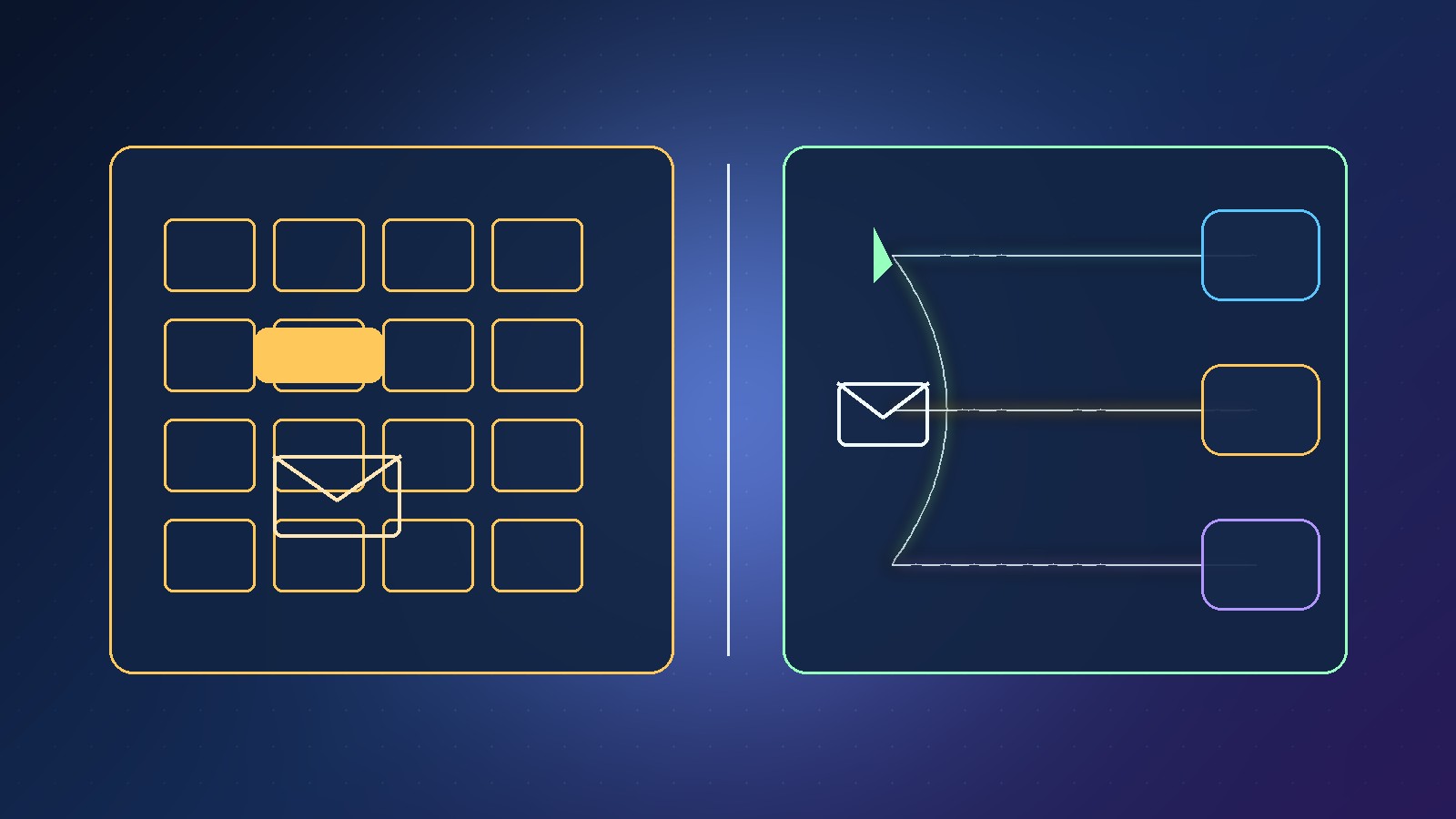
Use a broadcast when one timely message should reach a defined live segment now. Use a behavioural sequence when the next email should wait on what each contact does — clicks, forms, bookings — so follow-up stays personal without writing a new campaign every hour.
Key takeaways
- Broadcasts are best for news, launches and one-time announcements
- Behavioural sequences branch on actions, not calendar days alone
- Same live segment can power either format
- Start with a broadcast if you lack a clear trigger; add branching when one behaviour matters
- Supports our behaviour-based email marketing guide
📘 Part of the main guide: This how-to supports our article on Behaviour-Based Email Marketing Made Simple (vs Blind Broadcasts). Start there for the full behaviour-based email marketing overview, then come back to these steps.
Our latest video contrasts the failure mode of blind broadcasts with follow-up based on what the contact did. This guide answers a narrower question: when is a simple broadcast enough, and when do you need a behavioural sequence?
Read it alongside Behaviour-Based Email Marketing Made Simple (vs Blind Broadcasts). For building the branched path itself, use How to Build a Behaviour-Based Email Sequence.
Disclosure: Prodify Digital may earn a commission via our Scale.gg bonus links.
What is a broadcast email?
A broadcast email is a single send to a chosen audience at a chosen time. Everyone in that audience who is eligible gets the same message (personalisation tokens aside).
Broadcasts are not “bad”. They fail when the audience is everyone, every time, with no link to recent behaviour.
What is a behavioural sequence?
A behavioural sequence waits, branches and applies the next action when a contact does something — or fails to. Two people who joined the same day can receive different emails because their clicks diverged.
That is the core of behaviour-based email marketing: the calendar may still matter for delays, but behaviour decides the path.
When should you send a broadcast?
Choose a broadcast when:
- You have one timely announcement (launch, deadline, event reminder)
- The segment is already tight (for example a live segment of trial users)
- You do not yet have a reliable trigger to branch on
- You need a quick test of subject line and offer before investing in a multi-step flow
💡 Tip: A broadcast to a sharp live segment often beats a complex sequence aimed at the whole list.
When should you use a behavioural sequence?
Choose a behavioural sequence when:
- The next message depends on whether they clicked, booked, bought or completed a form
- You would otherwise send several manual broadcasts that only differ by behaviour
- Sales or onboarding needs different paths after the same opt-in
- A Scale.gg product event (webinar, quiz, booking, purchase, invoice) should start follow-up automatically
⚠️ Warning: Do not build a twelve-branch tree for a one-line announcement. Match complexity to the decision the contact actually makes.
How do you decide in five minutes?
Ask these five questions:
- Is there one message everyone in this segment should see today? → broadcast
- Does the next email change if they take a specific action? → behavioural sequence
- Can I name that action in plain language (did / did not)? → sequence is ready
- Is my live segment already correct? → if no, fix the audience first
- Have I tested a sample contact on the path? → required before approve
| Situation | Prefer |
|---|---|
| Product launch to trial users | Broadcast to a live segment |
| Follow-up after pricing-page click | Behavioural sequence |
| Weekly tips to newsletter list | Broadcast (or light drip) |
| Post-webinar paths by attendance | Behavioural sequence |
| One deadline reminder | Broadcast |
Next: Continue with Behaviour-Based Email Marketing Made Simple (vs Blind Broadcasts), set up audiences in our live-segments guide, or visit the bonus page.
Frequently asked questions
Can I use both?
Yes. Many teams broadcast announcements to a live segment and reserve behavioural sequences for high-intent paths.
Is a drip the same as a behavioural sequence?
Not always. A calendar drip ignores behaviour; a behavioural sequence branches on actions.
Where should I start if I am new?
Tighten one live segment, send one careful broadcast, then add a single behaviour branch when you have a clear trigger.
Where is the main article?
Behaviour-Based Email Marketing Made Simple (vs Blind Broadcasts).
The bottom line
Broadcasts deliver one timely message to a defined audience. Behavioural sequences deliver the next message because someone did something real. Pick the simpler tool that matches the decision — and keep both tied to live segments. Full context: Behaviour-Based Email Marketing Made Simple (vs Blind Broadcasts).
Related posts
- Behaviour-Based Email Marketing Made Simple (vs Blind Broadcasts)
- How to Build a Behaviour-Based Email Sequence (Not a Calendar)
- MailBaser Smart Email Marketing Automation: Behaviour-Based Sequences
