

Quick answer
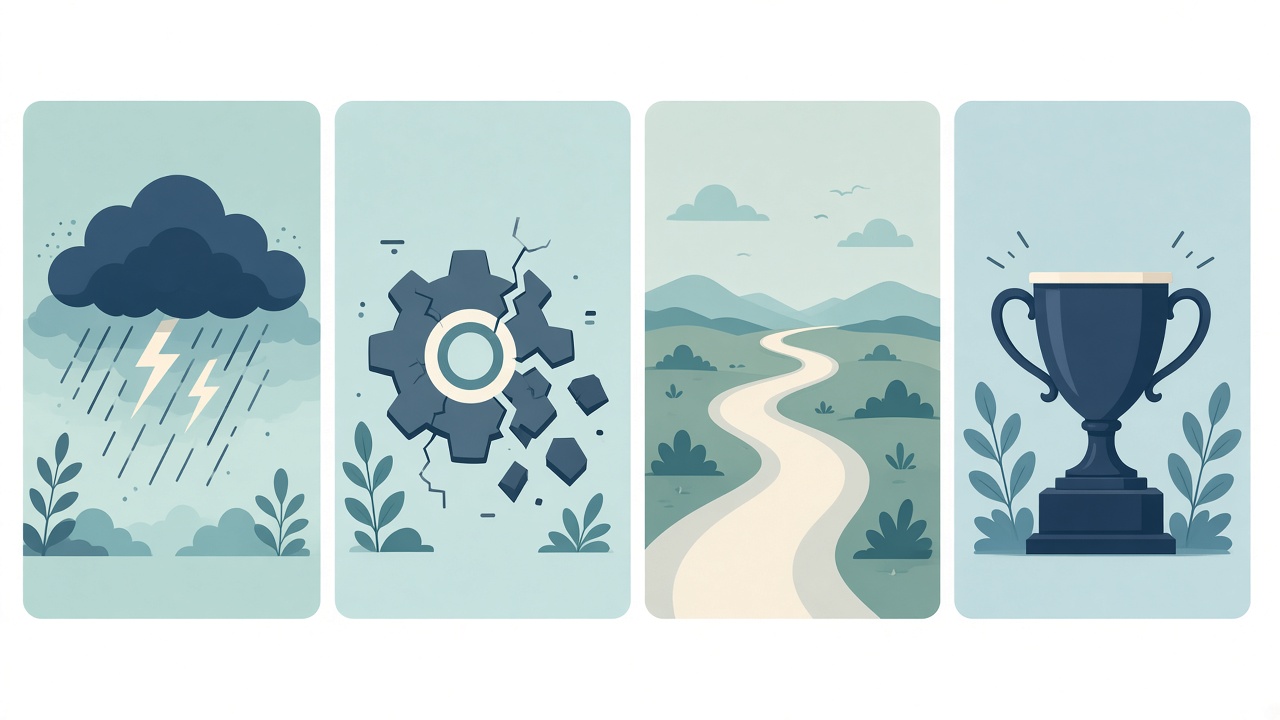
Pain, problem, path and prize are four types of marketing angle. Pain names what hurts today, problem explains the underlying cause, path shows how the buyer wants to move forward and prize describes the outcome they want. Use pain and problem angles to grab attention, path angles to explain your offer and prize angles to close. Shortlist two of each from your AI drafts and test them before scaling.
Key takeaways
- Pain = what hurts today; Problem = the cause
- Path = how they want to move forward; Prize = the outcome
- Match each angle type to a funnel stage
- Shortlist two per type and test, don't run all 32
This guide answers one question from my article Scale.gg ClickCampaigns: Alex AI, 20+ Roles and Buyer Intelligence: buyer intelligence gives you 32 angle drafts across four categories, so how do you turn them into ads that work?
📘 Main article: This guide supports our full article, Scale.gg ClickCampaigns: Alex AI, 20+ Roles and Buyer Intelligence. Read it for the complete picture.
Disclosure: I offer a Scale.gg bonus bundle and may earn a commission if you buy through my links. This does not change my assessment.
What do the four angle types mean?
In ClickCampaigns, buyer intelligence creates 32 reusable angle drafts across pain, problem, path and prize. Those angles become messaging hooks for ads, VSSL scripts, webinars and lead magnets. Here is how I think about each type.
| Angle type | Question it answers | Example for a course creator |
|---|---|---|
| Pain | What hurts right now? | “Spending weekends on launch admin instead of teaching” |
| Problem | Why does it keep happening? | “Your tools don't talk to each other, so every launch starts from scratch” |
| Path | How could it change? | “Plan the whole campaign from one brief, then approve each piece” |
| Prize | What does success look like? | “Launch in days and spend weekends on what you enjoy” |
These examples are illustrations, not claims about any product's results.
Where does each angle fit in the funnel?
- Pain: cold traffic and scroll-stopping ad hooks
- Problem: lead magnets, webinar openings and the first email
- Path: landing pages, VSSL scripts and explainer content
- Prize: retargeting ads, sales page headlines and final emails
A full campaign uses all four in sequence. Pain earns attention, problem builds understanding, path introduces your solution and prize motivates the decision.
How do you shortlist from 32 drafts?
- Read all 32 once, quickly.
- Remove any that make claims you cannot support.
- Remove any that do not match your validated buyer persona.
- Pick the two strongest from each category, giving you eight.
- Rewrite them using real customer language.
💡 Tip: Rewrite your shortlisted angles using exact phrases from customer tickets or calls. Real words usually beat polished AI copy.
Do not run all 32 at once. Eight is enough to learn which category resonates.
⚠️ Warning: Testing every angle at once spreads your budget too thin to learn anything. Shortlist, test and expand.
How do you test the angles?
| Step | What to do |
|---|---|
| Choose a channel | One traffic source you already understand |
| Set a fixed budget | Split evenly across your eight angles |
| Keep everything else equal | Same image style, offer and landing page |
| Measure | Click-through rate first, then conversions |
| Decide | Keep the top two or three, retire the rest |
Once you know which category works best, ask ClickCampaigns' specialists to build more assets around that winner. Because the roles stay on one master brief, the landing page, emails and ads can carry the same angle without drifting.
Shortlist eight angles. Two from each category is enough for your first test round.
How do you keep angles consistent across assets?
Angle drift is a common launch problem. The ad promises one thing and the email talks about another. In my main article I explained that specialists such as Ryan for direct response copy, Jordan for email and Chase for paid media work from one approved brief.
Add your winning angle to that brief explicitly, then check each artefact before approving it. You keep final approval on every draft.
What mistakes should you avoid?
- Using pain angles that exaggerate or frighten
- Prize angles that promise results you cannot prove
- Mixing two angle types in one short ad
- Judging an angle on a single day of data
For more on avoiding AI ad errors, see our guide to common mistakes using AI for ads.
Want help planning your first ClickCampaigns launch? Get my Scale.gg Starter Bonus Bundle and find more practical guides on Prodify Digital.
Frequently asked questions
What is a pain, problem, path, prize framework?
A way of grouping marketing angles by what they address: current pain, its cause, the route forward and the final outcome.
How many angles does ClickCampaigns create?
Buyer intelligence creates 32 reusable angle drafts across the four categories.
Which angle type works best?
It depends on your audience and funnel stage. Test two of each to find out.
Can I use angles outside ads?
Yes. They also work as hooks for VSSL scripts, webinars, emails and lead magnets.
Should I edit the AI angle drafts?
Yes. Rewrite them with real customer language and remove any claims you cannot support.
The bottom line
Pain, problem, path and prize give you a map for every stage of a campaign. Shortlist eight angles, test them fairly and build your assets around the winners.
Related posts
- Scale.gg ClickCampaigns: Alex AI, 20+ Roles and Buyer Intelligence
- How to Validate AI Buyer Personas Before You Spend Ad Budget
- Common Mistakes Using AI for Ads

[…] Try four angles: pain, prize, problem and path; see Pain, Problem, Path, Prize: How to Use AI Angle Drafts in Your Ads […]
[…] Pain, Problem, Path, Prize: How to Use AI Angle Drafts in Your Ads […]
[…] Pain, Problem, Path, Prize: How to Use AI Angle Drafts in Your Ads […]