

Quick answer
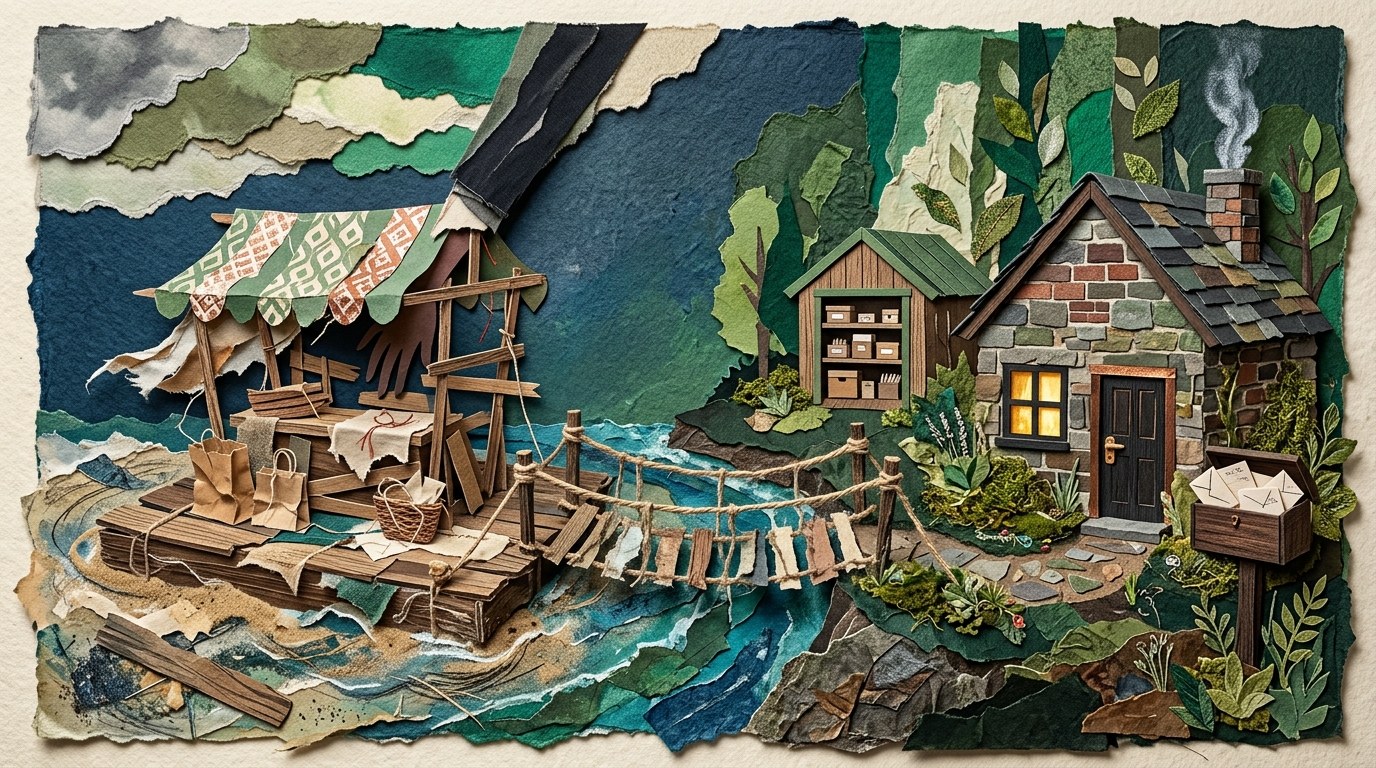
Owned reach vs rented reach comes down to who controls the connection between you and your audience. Rented reach is your followers on a social platform: the work is real, but the platform decides who sees your posts and whether your account stays open. Owned reach is an email list, content on your own website and a small digital product, things a rule change can’t quietly switch off. As we explain in our latest video, you don’t need to leave social media. Use platforms to be found, and use what you own to stay in touch.
Key takeaways
- Rented reach is followers on a platform you don’t control. Owned reach is a direct connection nobody else can switch off.
- Reach usually disappears in three ways: algorithm changes, account problems and policy shifts.
- Build three owned assets: an email list first, then a simple website on your own domain, then a small digital product.
- Start small. 10 subscribers who want to hear from you are worth more than a big number who don’t.
- Be realistic: owned reach takes months, not days, and slow early growth is normal.
- Your next step: list where your audience lives today, circle what you own, and start a free email list this week.
🛠️ Practical guides
Ready to put this into practice? These step-by-step guides answer two common follow-up questions:
- Audience Ownership Audit: How to Map Where Your Audience Lives and What You Actually Own — a 20-minute pen-and-paper exercise to see which of your audience you can actually reach, and what to fix first
- How to Build a One-Page Home Base Website for Your Audience — set up a simple one-page site on your own domain with who you help, what you offer and a sign-up box
In this guide
- Watch: the source video
- What is the difference between owned reach and rented reach?
- Should you leave social media?
- How does reach on a platform disappear?
- Owned asset 1: why build an email list first?
- Owned asset 2: what should go on your own website?
- Owned asset 3: what counts as a small digital product?
- How do the three owned assets fit together?
- How long does it take to build owned reach?
- What should you do this week?
- Frequently asked questions
- The bottom line
- Related posts
Platforms change their rules, and people lose reach they spent years building. It isn’t your fault, but it is your risk.
In our latest video, I go through the difference between owned reach vs rented reach, the three common ways reach disappears, and the three things I’d build so one rule change can’t take everything with it. This article expands on each part with simple steps you can take this week, even if you’re starting from zero.
Watch: the source video
What this video covers: The difference between rented reach (followers on social platforms) and owned reach (things you control), the three ways reach usually disappears, and the three owned assets to build: an email list, content on your own site and a small digital product.
Video: Prodify Digital (@Prodifydigital). This article expands on the ideas in our video. There are no promised results here: building owned reach takes months, and what you get depends on your topic, your effort and your audience.
What is the difference between owned reach and rented reach?
Rented reach is an audience you can only reach through someone else’s platform. Owned reach is an audience you can contact directly, on your own terms.
Think of social media followers like renting a flat. You did the work of building that audience, and the work was real. But the platform is the landlord. It decides who sees your posts, how often, and whether your account stays open. The landlord sets the rules and can change them.
Owned reach works differently. When someone joins your email list, visits your website on your own domain or buys a product you made, nobody can cut the connection between you without you knowing about it.
| Rented reach | Owned reach | |
|---|---|---|
| Examples | Followers on YouTube, TikTok, Instagram, Facebook, X, LinkedIn | Email list, website on your own domain, your own digital product |
| Who decides who sees your content? | The platform’s algorithm | You |
| Can it be switched off without warning? | Yes: suspensions, restrictions or hacks | Very unlikely; you can usually export and move it |
| Best used for | Being discovered by new people | Staying in touch and going further together |
| Can you take it with you? | Usually not | Usually yes |
💡 Tip: A quick test: if the platform shut down tomorrow, could you still contact these people? If the answer is no, that reach is rented.
Should you leave social media?
No. Platforms are brilliant for being discovered, and you should keep using them. The aim isn’t to leave. It’s to stop relying on one place you don’t control.
The simple rule we use is this: use platforms to be found, and use things you own to stay in touch. Every post can still do its job on the platform. It just also gives people a clear, easy way to come closer, such as a free checklist that joins them to your email list.
How does reach on a platform disappear?
Reach on a platform usually disappears in one of three ways: the algorithm changes, your account has a problem, or the platform changes its policies. None of these means platforms are bad. It just means one platform is one point of failure.
| What happens | What it looks like | Why it matters |
|---|---|---|
| 1. Algorithm changes | A format that worked well last month is shown to fewer people this month | You didn’t do anything wrong; the system moved |
| 2. Account problems | Your account is restricted, suspended or hacked, sometimes by mistake | Getting it sorted can take a long time, and you can’t reach anyone meanwhile |
| 3. Policy shifts | Changes to what’s allowed, how links work or what can be monetised | If your whole plan depends on one rule staying the same, it’s a fragile plan |
⚠️ Warning: If an account problem happens, you can’t use that account to tell people where else to find you. Set up your owned channel before you need it, not after.
Owned asset 1: why build an email list first?
An email list is the owned asset I’d build first, because it lets you reach people directly without needing an algorithm’s permission. When someone gives you their email address, they’re saying “yes, keep in touch”.
It’s also portable. If you ever change email providers, you can usually export your list and take it with you. Your followers on a platform rarely work that way.
It doesn’t need to be fancy. You need three things:
- A free email tool. Most well-known providers have a free starter plan.
- A simple sign-up page or form.
- One small, useful thing to offer, such as a checklist that solves one problem for the people you help.
Start small. 10 subscribers who actually want to hear from you are worth more than a big number who don’t. For practical ideas, see 3 free ways to get your first 100 email subscribers and where to put email signup links on YouTube.
💡 Tip: The principle matters more than the tool. Pick a free one you find easy, and you can move later. Don’t spend a week comparing providers.
Owned asset 2: what should go on your own website?
A website on a domain you own is your home base: one place you control, where every platform can point back to. If a platform changes, your address doesn’t.
It can be one page to begin with. That page only needs to say three things:
- Who you help, in one plain sentence.
- What you offer, whether that’s free tips, a checklist or a product.
- A sign-up box for your email list.
That’s enough. You can grow it over time by turning your best videos or posts into short written articles, which also helps people find you through search. Our guide on how to build a one-page home base website walks you through it step by step.
Want to see what you actually own right now? Try our audience ownership audit. It takes about 20 minutes with a pen and paper, and it tells you exactly where to start.
Owned asset 3: what counts as a small digital product?
A small digital product is a simple, useful thing you’ve made that solves one problem, such as a template, a checklist or a short guide. It’s yours. You decide the price, where it’s sold and who hears about it first.
It doesn’t have to be big. A one-page planning template or a short how-to guide is a good first product, especially if it grows naturally out of questions your audience already asks you.
| Product type | Good for | Example |
|---|---|---|
| Template | Saving people setup time | A content planning spreadsheet |
| Checklist | Making sure nothing is missed | A pre-launch checklist for a first email |
| Short guide | Solving one specific problem step by step | A 10-page guide to setting up a sign-up page |
A product also gives your email list a purpose. People who joined for free help can choose to go further with you, without you having to rely on a platform to reach them.
How do the three owned assets fit together?
Each owned asset supports the others: platforms help people find you, your site gives them somewhere to land, your email list keeps you connected, and your product gives them a way to go further with you.
| Piece | Its job | What it links to |
|---|---|---|
| Social platforms (rented) | Help new people discover you | Your website or sign-up page |
| Your website (owned) | Somewhere to land that you control | Your sign-up box and your product |
| Your email list (owned) | Keeps you in touch, directly | Your best content and your product |
| Your digital product (owned) | A way for people to go further with you | Back to your list for updates and support |
This is where simplicity and ownership meet. You don’t need ten tools or a complex funnel. Three small things you own, linked together, are much more resilient than one big following you rent. Later, you can automate the boring parts, such as a welcome email that delivers your checklist automatically.
How long does it take to build owned reach?
Building owned reach takes months, not days. Your email list will probably grow slowly at first. That’s normal, and it isn’t a sign you’re doing it wrong.
I can’t promise any particular result, and I’d be wary of anyone who does. What I can say is that every subscriber, every page and every product you own is something a rule change can’t quietly take away. For an honest look at what to expect, read the truth about building an email list in 2026.
⚠️ Warning: Be careful with anyone selling a “guaranteed” number of subscribers or sales. Bought or forced sign-ups don’t want to hear from you, and they can hurt your email delivery.
What should you do this week?
This week, write down where your audience lives today, circle what you actually own, then start a free email list.
- Grab a piece of paper and list every platform where people follow you, with roughly how many people are there.
- Circle anything you actually own, such as an email list or a website on your own domain.
- If nothing is circled, that’s fine. That’s exactly where most of us start.
- Start a free email list this week, with one simple sign-up form and one small useful thing to offer.
Our audience ownership audit guide turns this into a simple worksheet you can repeat every few months.
Frequently asked questions
What is rented reach?
Rented reach is the audience you can only reach through a platform you don’t control, such as your followers on YouTube, TikTok or Instagram. The platform decides who sees your posts and whether your account stays open.
What is owned reach?
Owned reach is an audience you can contact directly, such as your email list, visitors to a website on your own domain and buyers of your own digital product. Nobody can switch off that connection without you knowing.
Should I stop posting on social media?
No. Platforms are great for being discovered. Keep posting, and give people a simple way to join something you own, such as your email list.
Which owned asset should I build first?
An email list. It lets you reach people directly, and you can usually export it if you change providers. A free email tool, a simple sign-up page and one useful checklist is enough to start.
Do I need a big website?
No. One page on your own domain that says who you help, what you offer and has a sign-up box is enough to begin. See our one-page home base website guide.
How long does it take to build owned reach?
Months, not days. Early growth is usually slow, and that’s normal. Nobody can honestly promise a particular result.
The bottom line
Your followers are real, but they aren’t fully yours. The answer to owned reach vs rented reach isn’t to quit platforms. It’s to use them to be found, then invite people into three simple things you own: an email list, a home base website and a small digital product. Start with the list, keep it small and genuine, and give it time.
Your next step: do the audience ownership audit today, then start a free email list this week. If you’d like help building something you own, visit Prodify Digital, and subscribe on YouTube for our next video on getting your first 100 subscribers.
Related posts
- 3 Free Ways to Get Your First 100 Email Subscribers
- The Truth About Building an Email List in 2026
- Where to Put Email Signup Links on YouTube in 2026
