


Quick answer
Quick answer: Your first affiliate email should help one reader take one sensible next step. Begin with the problem they recognise, explain a useful idea in plain language, and make the recommendation only after the reader understands why it may be relevant. Use clear disclosure and a modest call to action. You do not need a clever story, a dramatic promise or a long list of links.
A first email is not the moment to prove that you are an expert or to force a purchase. It is an opportunity to practise being useful. A reader should finish it knowing what the email was about, why the subject matters and what they can do next. If the product is not the best next step, the honest email points them to a free resource instead. That is how a list becomes an asset you own rather than a group of people you repeatedly interrupt.
Choose one reader before the subject line
The most common reason an affiliate email becomes vague is that it tries to speak to everyone. Start with one person and one situation. You might be writing for a new affiliate who has found several offers but does not know how to judge them. You might be writing for a creator with a small list who wants to make one responsible recommendation. Both are real audiences, but they need different examples and different next actions.
Write a one-line reader note before you draft: “This email is for a beginner who wants to choose an offer they can explain honestly.” That sentence keeps every paragraph focused. It tells you which jargon to remove, which caveat to include and what not to claim. If a sentence does not help that particular reader, it can usually be deleted. Clarity is more persuasive than a crowded email.
A reader note also stops you using someone else’s launch language. Your job is not to reproduce a sales page in a smaller box. Your job is to interpret a useful part of a decision for someone who trusts you enough to open an email. That is a different kind of writing, and it is more valuable over the long term.
Name one problem, not a whole lifestyle
Good emails are built around a clear problem. “I am overwhelmed by offers” is a usable problem. “I want financial freedom” is a broad ambition that cannot be solved in one message. The practical problem gives you something to explain: perhaps the reader needs to compare what an offer includes, understand its audience or identify an honest disclosure. The broad ambition invites promises that you cannot support.
Open with the moment the reader recognises. For example, they may have seen a product promoted by several people and wondered whether it is actually appropriate for their audience. Describe that moment without making it sound like a failure. Then give one useful principle: judge the offer by the reader problem it solves, not by the commission attached to it. This immediately turns the email into help rather than hype.
Keep the principle concrete. A reader does not need a complete business plan from one email. They may need a short check: who is this for, what will they receive, what effort does it require and can I describe it without exaggerating? That small framework is enough to earn attention and build a bridge to a useful resource.
Give help before you give a link
A recommendation works better when the reader receives something useful before they are asked to act. This does not mean withholding the link or writing a huge essay. It means explaining one decision clearly. In this case, show the reader how to separate an offer’s stated features from claims they cannot independently verify. That idea alone helps them become more careful, whether or not they use your link.
Use a small example. Imagine a course page says that it includes templates, lessons and support. Those are specific things a reader can check. If it says the course will change their income or make a business effortless, treat that as promotional language rather than a fact to repeat. A good affiliate email makes that distinction calm and obvious. It does not attack the seller and it does not turn a claim into certainty.
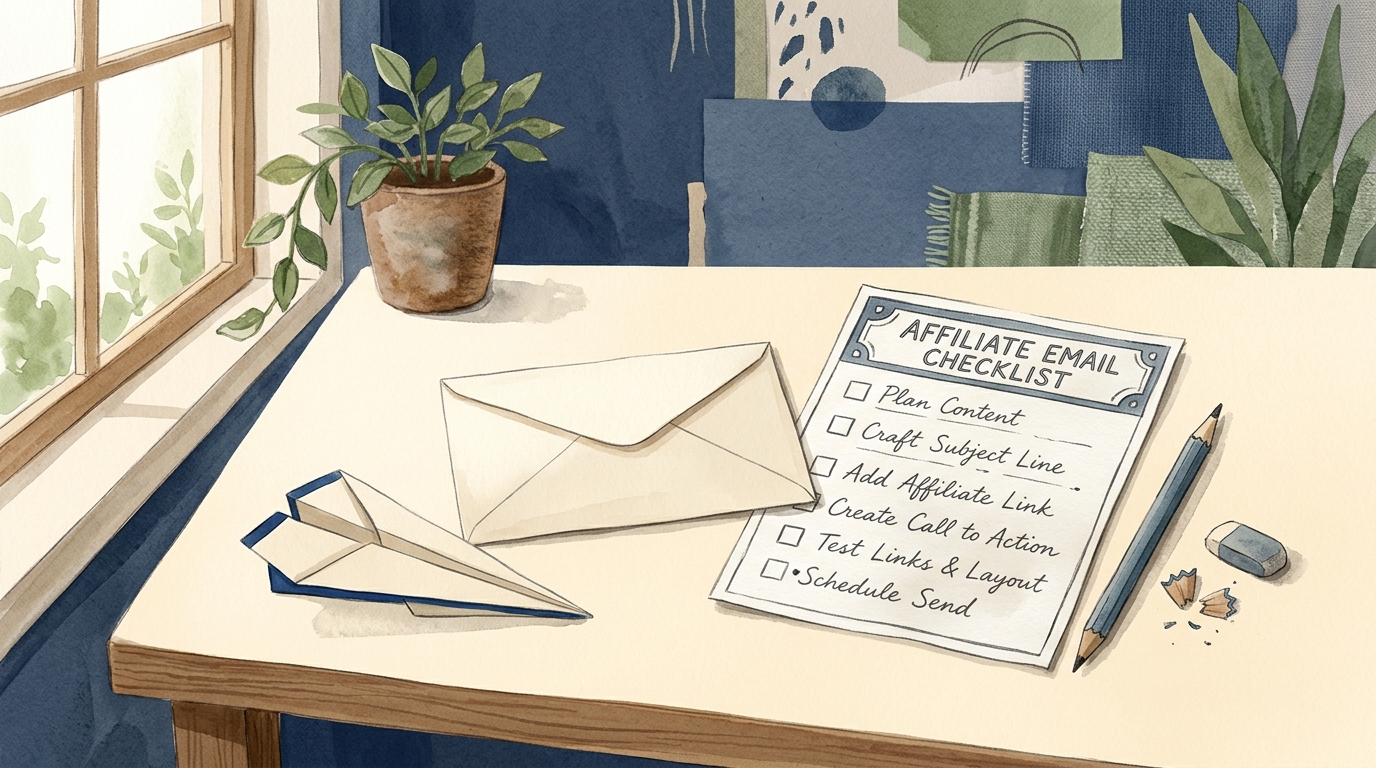
The free First Affiliate Offer Checklist is a suitable next step because it gives the reader a way to turn this principle into a plan. It asks them to define the reader, resource and first email before they share an offer. That is useful whether they recommend a product this week or decide to wait.
Use a simple first-email structure
A practical structure keeps the email easy to write and easy to read. Start with a recognisable situation. Follow with one insight or small checklist. Add a short example. Then give one next action. Finally, include a clear disclosure if an affiliate link is present. This order respects the reader’s attention because it answers “why should I care?” before it asks “what should I do?”
Your opening can be conversational, but it should not be empty. Avoid generic lines about being excited to share an opportunity. Instead, say what the email will help the reader decide. A line such as “Before you recommend your first offer, check whether you can explain who it actually helps” has a clear job. It sets an expectation and gives the reader a reason to continue.
The middle of the email should carry the value. Do not hide the useful point behind several paragraphs of personal story. A short story is fine when it shows the lesson, but the reader should still be able to skim the message and find the decision they came for. Finish with one link and a label that explains exactly what it delivers.
Choose language that protects trust
Trust is built sentence by sentence. Use language that describes rather than guarantees. Say an offer “may help with” a defined task when that is all you can support. Say “check the current details” when terms can change. Say “this may be a fit if” when different readers will need different things. These phrases are not weak; they are accurate. They leave the decision with the reader.
Avoid invented urgency. If there is a genuine deadline you can verify, state it with the date and explain what changes. If you cannot verify one, do not create pressure with phrases such as “don’t miss out” or “last chance”. New affiliates often feel they must move quickly because other people appear certain. Your email can be the calm counterweight: a place where they are allowed to make a considered choice.
The same rule applies to personal experience. If you have used an offer, say what you used and what you observed, without presenting your experience as a universal result. If you have not used it, do not imply that you have. You can still share carefully verified facts and an honest reason why the offer may be relevant.
Put disclosure where readers can see it
A disclosure should appear near the affiliate recommendation, in ordinary British English. It can be one sentence: “If you choose to buy through my affiliate link, I may receive a commission at no extra cost to you.” Then add the principle you use: you aim to recommend resources relevant to the topic, and readers should review current details before deciding. The point is clarity, not a legal performance.
Do not place the disclosure in a tiny footer or after several buttons. A reader should see the commercial relationship before they click. This helps them make an informed choice and makes your recommendation more credible. It also reminds you to keep the body of the email balanced. If the link needs a long defence, the offer or its place in the email may need another look.
Disclosure does not give permission to exaggerate. It sits alongside accurate copy, a relevant reader problem and a clear next action. All four elements matter. When they are in place, you can write a recommendation that is transparent without becoming stiff or over-explained.
Test one action before you expand
Do not try to turn the first email into a complete campaign. Send one helpful message, then pay attention to the actions that show understanding. Did people open the checklist? Did they reply with a useful question? Did the email lead to confusion about what was free and what was paid? These signals are more useful than treating a small number of clicks as proof that an offer is perfect or poor.
Keep a simple record. Note the date, subject line, reader problem, link destination and the feedback you received. If you change something next time, write down what changed. This creates an evidence trail that belongs to you. It helps you improve your email sequence without relying on another marketer’s promise or dashboard screenshot.
A small test also reduces pressure. You are not trying to establish an income claim or judge your entire business from one send. You are checking whether your message was clear and whether the next step matched the reader’s needs. That is a sensible foundation for future emails.
Review the message on a phone
Many readers will open an email on a phone. Before you send, read the draft on a narrow screen. Check that the first paragraph makes sense without scrolling, that the link label is not vague and that the disclosure is still visible near the recommendation. Short paragraphs are easier to follow than dense blocks, especially when a reader has only a few minutes.
Check every destination too. The words beside the link should match the page it opens. A link described as a checklist should lead to the checklist, not directly to a different offer. If the reader will need to enter an email address to receive a PDF, say that. Accurate expectations reduce abandoned clicks and make your email feel considered.
Finally, read the copy aloud. If it sounds like a claim you would not make in a conversation, rewrite it. The aim is a voice that is clear, practical and respectful of the reader’s judgement. That is more memorable than a dramatic script.
Bottom line
Your first affiliate email does not need to be flashy. It needs one reader, one problem, one useful insight and one transparent action. Explain what you can verify, avoid promising outcomes and make the disclosure visible. When you are ready to outline the reader, resource and first email, get the free First Affiliate Offer Checklist. It is a free PDF delivered by email.
Use the checklist before you send rather than after something feels wrong. It gives you a simple pause point: can I explain the reader, the problem, the resource and the reason for the recommendation? If you can, your email is more likely to be useful. If you cannot, you have found what to improve before you ask anyone to click.
Choose a subject line that matches the email
A subject line is a promise about the message inside. It does not need to be clever, mysterious or dramatic. For this kind of email, choose a line that names the useful decision: “A simple check before your first affiliate recommendation” or “How to make your first offer email clearer”. The reader should be able to tell why opening might help them. When the subject and body agree, you attract people who actually want the information rather than short-lived curiosity.
Avoid implying a result that the email cannot deliver. Phrases about easy money, instant change or a secret method may attract attention, but they put the reader in the wrong frame of mind. They also make it harder to write a calm, useful message underneath. A specific subject line gives you a natural opening paragraph and makes the eventual action feel less abrupt.
A grounded example to adapt
Imagine your reader is considering a beginner resource but has not yet decided whether to promote it. Your email could begin by acknowledging that the hard part is not finding links; it is choosing one you can explain without overpromising. Next, give the four questions: who is it for, what does it include, what effort does it require and what could I verify? Then offer the checklist as a way to capture the answers. This is helpful even if the reader never buys anything.
Notice what this approach leaves out: no earnings estimate, no countdown and no claim that the offer will suit every reader. It gives a useful framework, makes the commercial relationship clear if a link appears later, and lets the reader retain control. That is the kind of message that can begin a healthy email relationship.
Invite a useful reply
A reply invitation can make a first email more valuable than another broadcast. Ask a small, answerable question such as “What are you finding hardest about choosing your first offer?” or “Which part of an offer page is hardest to judge?” Do not ask readers to disclose personal information or pressure them into a purchase. The point is to learn the language they use and the decisions that really slow them down.
Keep replies in your test log alongside clicks. A thoughtful reply may reveal a mismatch that a click total cannot show. Perhaps readers need help with a different first step, or perhaps your explanation needs a clearer example. Either insight lets you improve the next email while keeping the focus on the people you serve.
A short before-send check
Read the email once for the reader and once for accuracy. On the reader pass, check that the first line names the problem, paragraphs are short and the next action is obvious. On the accuracy pass, check that every claim is supported by what you know, every link has the right destination and any affiliate disclosure appears before the recommendation. Finally, test it on a phone. Small checks now prevent avoidable confusion later.
When you can answer those questions, send the email without trying to make it perfect. You are building a practice: listen, help, record what happens and improve the next message. A simple first email written with care is a far stronger starting point than a complicated promotion built on claims you cannot defend.
What to do after you send it
Give the message time, then review it without rushing to a conclusion. Look at whether the right people opened it, whether the checklist link was clear and whether any replies show that your explanation was useful. Keep the result in context. A quiet response does not prove that the topic has failed, just as a handful of clicks does not prove that a recommendation is right for everyone. Use the evidence to make one measured improvement.
If the email led to questions, use the questions to plan your next helpful piece of content. If readers clicked the checklist but did not move further, the checklist may have been the appropriate outcome. Your goal is a sequence of useful decisions, not pressure for a single result. That approach keeps your list healthier and makes later recommendations easier to understand.
Keep this standard as your list grows: each recommendation should leave the reader clearer, more informed and free to decide. That is a practical way to build trust while you learn what content serves your audience best.
Draft your first helpful affiliate email
Get the free First Affiliate Offer Checklist
Use the one-page PDF to plan the reader, resource and welcome email before you share an offer.
Frequently asked questions
How long should my first affiliate email be?
Long enough to explain one useful point and one next action. Clear structure matters more than a fixed length.
Do I need to include an affiliate link?
No. A free resource can be the better next step when a reader needs more preparation.
Should I mention commission?
Yes, disclose the affiliate relationship close to any affiliate recommendation.
Can I recommend something I have not bought?
You can share verified facts with clear limits, but never imply personal experience you do not have.
What should I measure?
Track whether readers understood the message, used the resource and asked clearer questions.
