

Quick answer
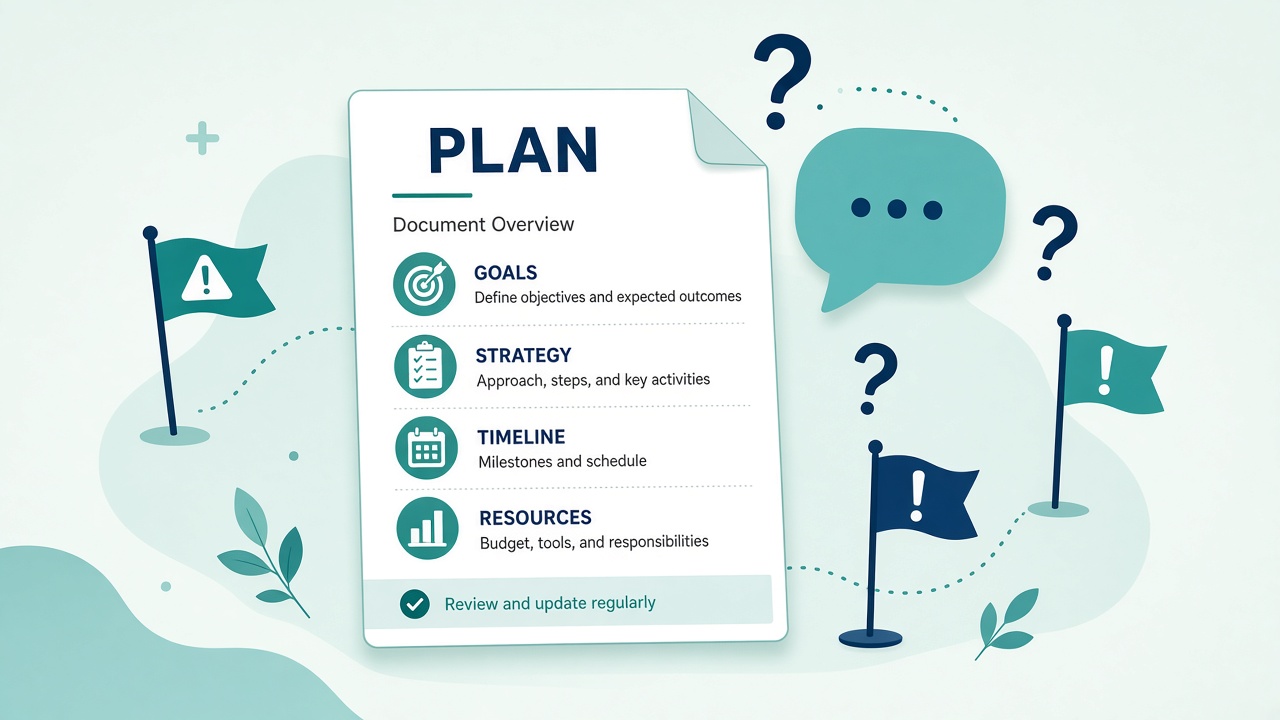
A devil's advocate prompt asks an AI tool to argue against your plan instead of helping you carry it out. Paste your plan, then ask for three reasons it could fail, the assumption most likely to be wrong and one question you have not asked. Models will not do this by default, so you have to request it explicitly, then decide yourself which objections matter.
Key takeaways
- AI models are trained to be helpful, not to challenge you
- Ask directly for reasons your plan could fail
- Always request one question you have not asked
- You still decide which objections matter
This guide answers one question from our article Narrow Superintelligence: What OpenAI’s 700 Maths Papers Mean for Your Work: if AI is great at answering questions but poor at challenging them, how do you get it to push back?
📘 Main article: This guide supports our full article, Narrow Superintelligence: What OpenAI’s 700 Maths Papers Mean for Your Work. Read it for the complete picture.
Why doesn't AI challenge you by default?
Our main article made a point that is easy to miss. Because models are trained hard to be helpful, they have not become much better at challenging your assumptions or reframing your question.
Ask for help with a plan and you will usually get help with that plan, even if the plan itself is the problem.
Models are trained hard to be agreeable collaborators. That is useful for drafting, but risky for decisions. The fix is simple: ask for disagreement on purpose.
⚠️ Warning: A helpful-sounding answer is not the same as a tested one. Treat the AI's objections as prompts for your own thinking, not as verdicts.
What is the devil's advocate prompt template?
Copy this and paste it after your plan:
Act as a sceptical reviewer. Do not help me carry out this plan yet. Instead: 1) give three specific reasons it could fail, 2) name the assumption most likely to be wrong and how I could test it, 3) describe one situation where this plan causes a new problem, and 4) ask me one question I have not asked. Be direct and concrete.
Each part does a different job.
💡 Tip: Save the template as a text shortcut or a saved prompt so you can paste it at the end of any planning conversation.
| Part | What it finds |
|---|---|
| Three reasons it could fail | Obvious risks you may have skimmed past |
| Weakest assumption | The belief everything else depends on |
| New problem it causes | Side effects, like the search tool that exposed conflicting documents |
| One unasked question | The gap nobody has thought to test yet |
When should you use it?
Use it on decisions that are expensive to reverse or affect customers:
- Launching a new offer or changing prices
- Rolling out a new AI tool to the team
- Automating a customer-facing step
- Changing how data or permissions are handled
- Publishing a strong claim in content
For small, reversible tasks it is usually overkill.
How do you act on the answers?
- Read every objection, then sort them into “already handled”, “worth checking” and “not relevant”.
- For each “worth checking” item, write one test or one question for a real person, such as a customer or colleague.
- Update the plan only after the check, not because the AI said so.
- Record what you decided and why.
The search example in our main article is a good model. Once someone asks what happens when a person loses access to a document, writing the test is easy. Knowing to ask is the valuable part, and this prompt gives you more chances to ask it.
Try it on your next decision. Paste the template under any plan you are about to approve and see what it raises.
How do you get sharper objections?
- Give real context: your audience, budget, timeline and constraints
- Ask for objections from a specific viewpoint, such as a customer, a finance lead or a security reviewer
- Ask a follow-up: “Which of these would you worry about most, and why?”
- Run it in a fresh chat so earlier enthusiasm does not shape the answer
What are the limits?
The AI still lacks your customer context, so some objections will be generic. It may also miss the most important risk entirely. Treat the output as a thinking aid.
The judgement about which risks are real, and which question truly matters, stays with you. That is exactly the skill our main article argues will keep its value.
Want more practical AI guides? We test tools and techniques against real business work. Browse the latest on Prodify Digital.
Frequently asked questions
What is a devil's advocate prompt?
It is a prompt that asks an AI to argue against your plan, list ways it could fail and raise questions you have not asked.
Does this work with any AI tool?
It works with most chat-based AI tools. Results improve when you give more context.
Will the AI always find the real problem?
No. It raises possibilities. You decide which ones are real and test them.
Should I use it for every task?
No. Use it for decisions that are costly to reverse or affect customers.
Why ask for “one question I have not asked”?
Because finding the right question is the hard, valuable part, and AI rarely volunteers it.
The bottom line
AI is built to help, not to argue. Ask it to argue on purpose, sort the objections yourself and test the ones that matter before you commit.
Related posts
- Narrow Superintelligence: What OpenAI’s 700 Maths Papers Mean for Your Work
- Edge-Case Testing for AI-Built Tools: Find the Question Nobody Asked
- AI Decision Log for Small Businesses
